
Broken Garage Door Spring: What to Do (Step-by-Step Guide)
Last updated:
By Literally Garage Door Team | Northern NJ garage door experts with years of hands-on experience serving Bergen, Essex, Morris, Passaic, and Hudson counties.
Published: February 16, 2026
Your spring just broke. Here's exactly what to do, what NOT to do, and how to get your door working again safely.
You Heard a Loud Bang: Now What?
If you heard what sounded like a gunshot or a car backfiring coming from your garage, you almost certainly have a broken garage door spring. This is the most common garage door emergency in Northern NJ, and it happens to thousands of homeowners every year, especially during cold weather when metal becomes more brittle.
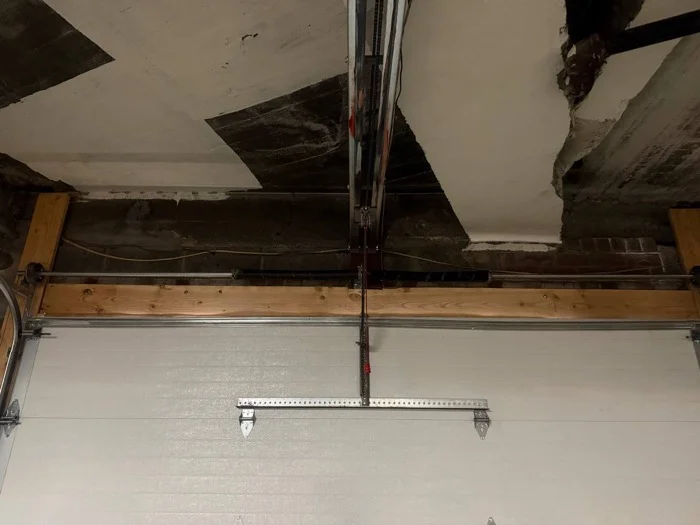
Don't panic. A broken spring isn't dangerous as long as you know what to do (and more importantly, what NOT to do). This guide walks you through the immediate steps to keep your family safe and get your door working again.
Step 1: Confirm It's a Broken Spring
Before calling for service, look for these telltale signs:
- A loud bang from the garage: This is the spring snapping. The sound travels through walls and can be alarming, but the spring itself has already released its energy; the immediate danger has passed.
- The door is extremely heavy: Try lifting the door manually from the bottom (if it's in the closed position). If it barely moves or feels like it weighs a ton, the spring is broken. Without functioning springs, you're trying to lift 150-400 pounds of dead weight.
- A visible gap in the spring: Look above your door at the horizontal metal bar (torsion tube). If you see a 2-3 inch gap in the coiled spring, it's snapped. This is conclusive confirmation.
- Cables hanging loose or tangled: When a spring breaks, the cables often unwind from the cable drums and hang loose. You may see tangled cable near the spring bar.
- The opener runs but the door won't budge (or opens a few inches): The opener motor isn't strong enough to lift the door without spring assistance. It may strain, make grinding noises, and shut off after a few seconds.
Step 2: What NOT to Do
This section is critical. These mistakes can cause serious injury:
- Do NOT force the door open: Without springs, the door's full weight is unsupported. If you manage to lift it and your grip slips, the door will slam down with hundreds of pounds of force. This can crush fingers, hands, or anything in its path.
- Do NOT keep pressing the opener button: Each attempt forces the opener motor to strain against the full weight of the door. This can burn out the motor, strip the gears, or damage the drive system. You'll turn a straightforward spring repair into a spring repair PLUS a full opener replacement.
- Do NOT pull the emergency release if the door is stuck in the UP position: The red cord hanging from the opener trolley disconnects the door from the opener. If the door is up and the springs are broken, pulling this cord releases the only thing holding the door up. It will crash down immediately. Only use the emergency release when the door is fully closed.
- Do NOT attempt to repair or replace the spring yourself: Garage door torsion springs store an enormous amount of energy, enough to cause severe injury or death. This is not an exaggeration, and this is not a YouTube DIY project. Professional spring replacement requires specialized winding bars, precise calculations, and training. Every year, people are seriously hurt or killed attempting DIY spring repair.
- Do NOT try to reattach or wind loose cables: Cables connected to the spring system are under tension. Attempting to handle them without properly securing the door and releasing spring tension is extremely dangerous.
Step 3: What You SHOULD Do
- Leave the door alone: If it's closed, leave it closed. If it's stuck open, leave it open and secure the garage as best you can (lock the interior door to your house, remove valuables if practical).
- Disconnect the opener: If the door is in the closed position, you can safely pull the emergency release cord to disconnect the door from the opener. This prevents someone from accidentally pressing the remote and straining the motor.
- Call a professional: Contact a garage door repair company for spring replacement service. Most reputable companies offer same-day service for broken springs. Call (551) 279-6408; we prioritize broken spring calls because we know your car may be trapped inside.
- Use an alternate exit: If your car is in the garage and you need to leave, use the house's front door, a side door, or a back door. Don't try to force the garage door open.
What Professional Spring Replacement Involves
Here's what happens when a professional arrives to replace your springs:
- Spring type identification: The technician determines whether your door uses torsion springs (mounted on a bar above the door; most common) or extension springs (mounted along the horizontal tracks, older systems). They measure the spring dimensions and the door's weight to calculate correct replacement specifications.
- Safe removal of the broken spring: Using winding bars and safety equipment, the technician safely releases any remaining tension and removes the broken spring.
- New spring installation: New springs are installed and wound to the manufacturer-specified number of turns. We recommend replacing BOTH springs even if only one broke, if one failed, the other has identical wear and will fail soon. This saves you from a second emergency call.
- Door balancing: The technician disconnects the opener and tests the door manually. A properly balanced door stays in place when opened halfway, neither rising nor falling. This balance test confirms the springs are correctly tensioned.
- System inspection: Cables, drums, rollers, hinges, and tracks are inspected for damage caused by the spring failure. Any issues are addressed.
- Full cycle testing: The door is connected to the opener and run through multiple open/close cycles. Auto-reverse safety function is verified.
How Much Does Spring Replacement Cost?
In Northern NJ, garage door spring replacement cost depends on the spring type and door weight. You get an exact, free estimate before any work begins. The job typically includes:
- Both springs (we always recommend replacing the pair)
- Professional installation and tensioning
- Door balance test
- Safety inspection of related components
The exact price depends on spring type, door weight/size, and whether additional components (cables, drums) need replacement. We provide exact pricing before starting work. For more details, see our complete repair cost guide.
How to Prevent Spring Breakage
- Annual maintenance: A professional tune-up includes spring inspection, lubrication, and balance testing. This extends spring life and catches early warning signs.
- Lubricate springs regularly: Apply silicone-based spray lubricant to spring coils every 3-4 months. This prevents rust; the leading cause of premature spring failure.
- Install high-cycle springs: When springs are replaced, upgrade to 25,000-cycle or higher-rated springs. They cost slightly more upfront but last 2-3x longer than standard 10,000-cycle springs.
- Keep the garage temperature stable: If possible, insulate your garage. Extreme cold makes springs more brittle and prone to fracture.
Related
- Broken spring repair service
- Garage door cable repair
- Garage door repair
- Repair cost guide
- Maintenance & tune-up
For more information, read our complete garage door repair guide.
Bergen, Essex, Hudson, Morris, Passaic, Sussex, Warren, Union and Somerset Counties.