
Garage door service
Garage Door Roller Replacement in Northern NJ
Bad rollers can make a garage door sound like it is dragging a toolbox up the wall. We replace worn, cracked, flat-spotted, or jumped rollers and check why they failed in the first place.
Licensed, insured and bonded
NJ HIC #13VH14134300
Estimate before approved work begins
Open 24 hours every day
Call When You Notice This
- Grinding or squealing as the door moves
- Rollers wobble, crack, or jump the track
- Door shakes on the way up or down
- Old plastic rollers are wearing out
What We Check
- Roller stems, hinges, brackets, tracks, and lubrication
- Door balance and spring strain
- Whether upgraded nylon rollers make sense
- Smooth travel and final safety testing
Roller Problems Homeowners Notice
- The door grinds, squeals, or shakes while moving.
- A roller is cracked, tilted, flat-spotted, or loose in the hinge.
- The door binds at one spot or looks uneven in the track.
- A roller popped out and the door should not be forced.
Local Service Area
Literally Garage Door serves homeowners across Northern NJ, especially Englewood Cliffs, Englewood, Fort Lee, Hackensack, Paramus, Teaneck, Clifton, Wayne, Hoboken, Jersey City, and nearby towns across Bergen, Essex, Hudson, Morris, Passaic, Sussex, Warren, Union, and Somerset counties.
Useful Safety Sources
Garage doors are heavy and spring systems store real force. For homeowner safety context, see DASMA garage door safety tips and the CPSC automatic garage door opener safety rule.
Related Service Pages
Emergency Garage Door Repair
If the door is stuck open, blocking a car, or unsafe to move, start with emergency repair.
Commercial Garage Door Repair
For a shop, warehouse, or building door, compare commercial repair before treating it like a house door.
Garage Door Opener Repair
If the motor runs, hums, reverses, or ignores the remote, opener repair is the better next read.
Garage Door Spring Repair
If the door lifts a few inches and drops, or you heard a loud bang, review spring replacement.
Garage Door Cable Repair
If the door hangs crooked or a cable is loose, review cable repair before using the opener again.
Garage Door Repair
If you are not sure which part failed, start with full garage door repair and symptom checks.
Helpful Articles
FAQs
How do I know if my rollers are bad?
Grinding, squeaking, wobbling, cracked rollers, or a shaky door are common signs.
Can I replace garage door rollers myself?
Some top rollers look simple, but lower rollers and brackets can be tied into spring tension. It is safer to have a tech check it.
Are nylon rollers better?
Nylon rollers can run quieter than old steel or plastic rollers when the rest of the door is aligned correctly.
Will new rollers fix every noisy door?
Not always. We also check hinges, tracks, spring balance, and opener strain.
Need garage door roller repair?
Call, tell us what the door is doing, and we will give you the next practical step.
More documented work
County Photos, Brands, and Recent Work
Related pages show real towns, real photos, common brands, and recent work examples for this service.
Brand support
LiftMaster, Chamberlain, Genie, Wayne Dalton, Clopay, Amarr.
Recent work
Paramus repair, Scotch Plains opener and spring, Basking Ridge spring, Lodi off-track, Lyndhurst spring and cable.
Service details
Garage Door Roller Replacement in Northern NJ
Garage door roller replacement helps doors that sound rough, shake while moving, bind in the track, or keep jumping out of alignment.
Problems this service covers
- The door is loud, jerky, or shaky during opening and closing.
- Rollers are cracked, worn flat, loose, or coming out of the track.
- The door binds at one spot or looks uneven while moving.
- Old steel rollers are making daily use louder than it should be.
What we check
- Roller wear, stem condition, hinge wear, track alignment, and bracket tightness.
- Door balance, spring tension, cable condition, and opener strain.
- Track bends, rubbing points, loose hardware, and noisy hinges.
- Smooth travel after replacement, with the door tested by hand and opener.
When to call
- Call when the door sounds like it is grinding or rattling in the tracks.
- Call when rollers look worn, tilted, or loose.
- Call before bad rollers damage tracks or panels.
Garage Door Roller Replacement FAQs
Will new rollers make the garage door quieter?
Often, yes. Worn rollers create a lot of noise, but we also check hinges, tracks, and opener strain.
Can bad rollers make a door come off track?
Yes. Worn or broken rollers can bind, tilt, or jump out of the track, especially when other parts are loose.
Real work and checks
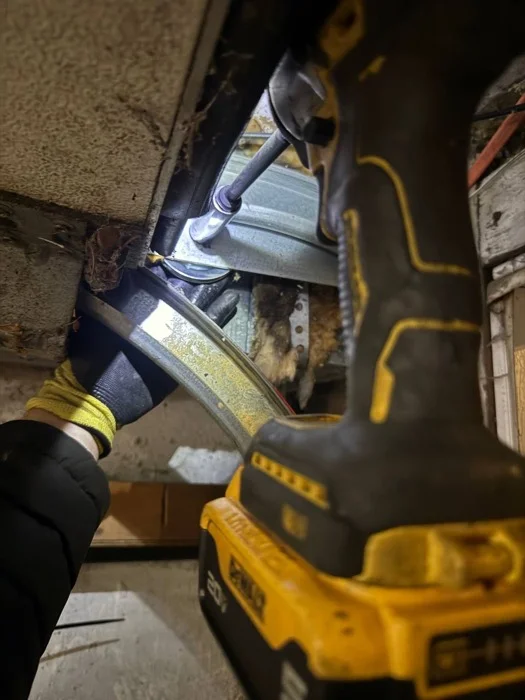
Garage Door Roller Replacement Photos
Bad rollers make the door loud, shaky, and more likely to bind or jump the track. We check why the roller failed before replacing parts.
Related work and service pages
What we check before recommending work
- Roller wear, hinge wear, stem angle, and track spacing.
- Door balance, spring strain, cable condition, and opener drag.
- Whether nylon rollers, lubrication, or track correction makes sense.
Call (551) 279-6408 for a free estimate if this sounds like your door.