
Garage Door Condensation or a Leak? A Northern NJ Fall Guide
Water on the inside of the door needs a closer look before you order new weatherstripping.
By Literally Garage Door LLC ·
Small droplets spread across a cold garage door or window can be condensation. Water tracing down from one frame corner during rain may point to a leak. A puddle at the threshold can have a different source again. Notice where the water first appears and when it happens. Those clues help separate a door problem from moisture elsewhere in the garage.
Why a garage door can be wet when it has not rained
Condensation starts with moisture in the air meeting a sufficiently cold surface. The EPA's home moisture guidance explains why water can collect on cold windows and other surfaces. It is the same basic reason a cold drink develops droplets on the outside of the glass.
On a chilly fall morning, the inside face of a garage door or its windows can be the place you first notice that moisture. Water may form across a broad area rather than entering through a single gap. That makes condensation worth considering before assuming the door is leaking.
The source of the moisture still matters. A damp floor, wet items stored in the garage, or an appliance ventilation problem may need attention. Amarr's garage door FAQs discuss condensation on the back of the door and note that building moisture and some appliances can contribute. Basement garages can have additional moisture from the ground.
Whether your garage is in Paramus, Wayne, or Morristown, the useful starting point is the pattern inside your own garage, not a replacement part chosen from a photo.
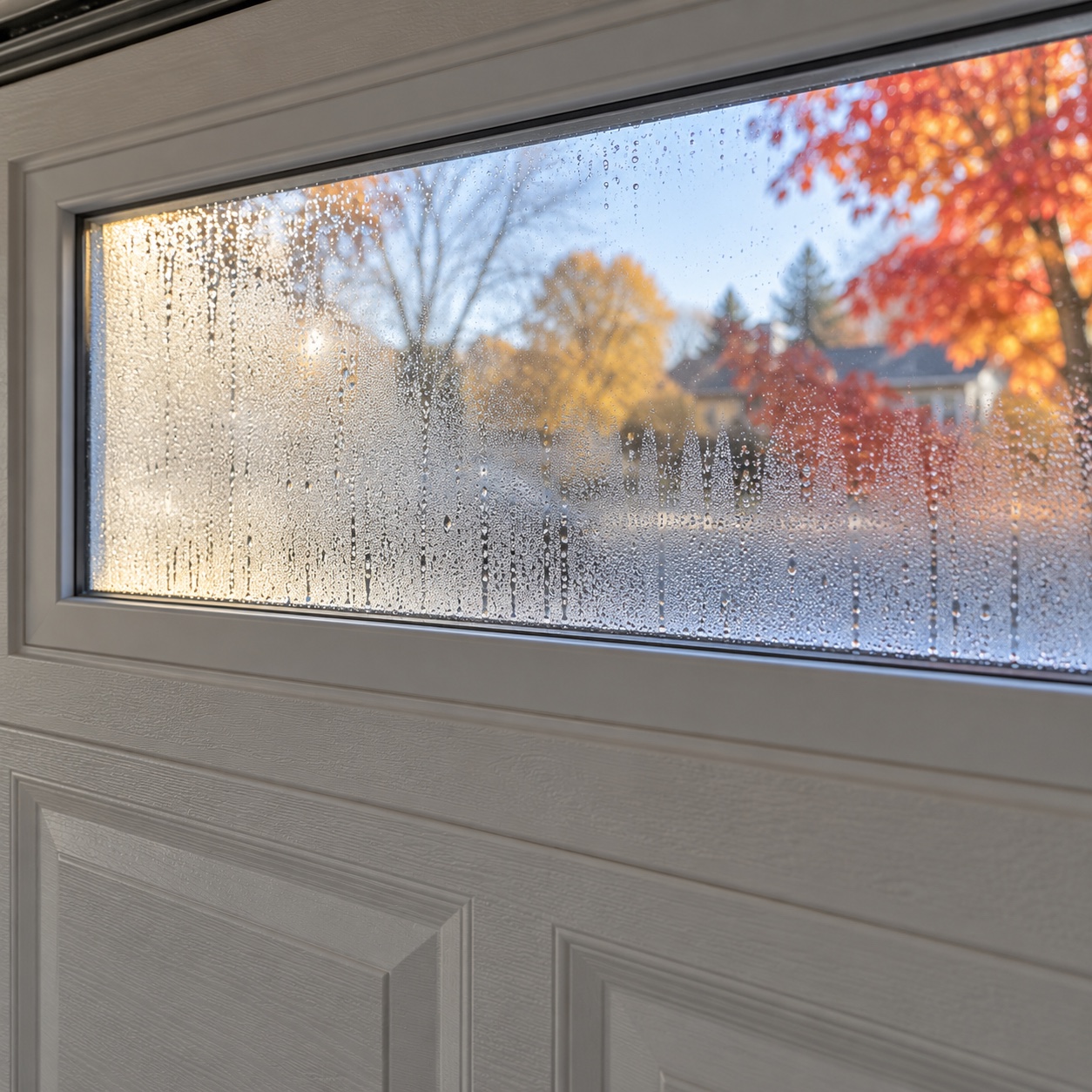
Three water patterns to tell us about
Droplets across the inside face
A film or beads on several cold panels or windows, especially without recent rain, makes condensation a possibility. It does not prove that all the moisture comes from the air.
A trail from one edge or corner
Water beginning at a window frame, top edge, or side during wind-driven rain calls for checking the door seals and the surrounding opening. Photograph the starting point if it is safe to see.
Water spreading across the floor
A puddle under the bottom edge may involve the bottom seal, floor contact, or water flowing toward the garage. Dampness beginning farther inside can need a different investigation.
These are observations to guide an inspection. Condensation and a rainwater leak can occur together. A garage door technician may also need to distinguish door leakage from roofing, masonry, drainage, or plumbing problems.
Five safe checks before you call
- Look with the door already closed. From the floor, note which surface is wet and where the first droplets or trail appear. Stay clear of hinges, tracks, cables, and the opening. Do not cycle a damaged or crooked door to investigate.
- Record the timing. Does the water appear on a dry cold morning, during rain from a particular direction, or after a wet car is parked? A short note over several days is more useful than a single puddle photo.
- Separate surface moisture from fog between panes. If the window is safely reachable from the floor, a small spot gently dried with a soft cloth can help identify moisture on the accessible surface. Do not climb, remove trim, or dismantle the window to check.
- Look for nearby clues. Note wet storage, damp walls, water paths, damaged visible seals, or leaves gathered outside the opening. Do not spray the door with a hose to reproduce a leak or reach beneath it to inspect the bottom seal.
- Make a simple moisture log. If you already have a temperature and humidity meter, record its readings in the garage along with the timing. A reading helps describe conditions; it does not identify a failed part by itself.
Leave springs, cables, bottom brackets, and door adjustments to a trained technician. Do not increase the opener's closing force to press a seal harder against the floor. Water near outlets, wiring, or the opener is a reason to keep clear and arrange appropriate professional help.
Fog inside an insulated window is a different clue
Moisture trapped between the panes of an insulated window cannot be wiped away from either exposed surface. Clopay's garage door window guidance identifies condensation between panes as a possible seal failure. Have the window assembly assessed before assuming a room-humidity change will clear it.
What can help, and what new seals will not solve
Start with ordinary housekeeping: keep stored cardboard and belongings away from damp areas, remove accessible standing water when safe, and avoid leaving wet items piled against the door. Follow the door manufacturer's care instructions when drying or cleaning the finish.
Recurring moisture can need ventilation or humidity control suited to the garage. Amarr notes that ventilation or a dehumidifier may help with condensation, and an insulated door may reduce it. Those are possibilities to assess, not a promise that any one purchase will cure the problem. Ask a qualified building or HVAC professional about persistent humidity, appliance venting, or moisture affecting more than the door.
Weatherstripping addresses gaps around a properly fitted door. It does not remove moisture already in the air, fix a roof leak, or redirect water running downhill into the opening. A bottom seal also needs to match the door's retainer and floor contact. For more on those parts, see our garage door weatherstripping service.
Do not add foam, boards, or other weight to the moving door as an improvised insulation fix. If you are considering a different door, our insulated versus non-insulated garage door guide explains the broader choice. A replacement decision should account for the opening and moisture source as well as the door itself.
When a garage door inspection makes sense
Arrange an inspection if you see a torn or missing seal, a damaged window frame, rust or finish deterioration that keeps returning, uneven floor contact, or water appearing repeatedly at the same door joint. Tell us if the door is also scraping, reversing, or moving unevenly.
Stop using the door if it is crooked, off track, has a loose cable, or makes a new grinding sound. Moisture does not make those mechanical symptoms safe to keep testing. Read our garage door safety guide for the warning signs.
Common questions about a wet garage door
Does condensation mean I need a new garage door?
No. Surface moisture alone does not establish that the door needs replacing. First identify where the water forms, the conditions when it appears, and the condition of the door and its seals.
Will new weatherstripping stop condensation?
It can address a worn perimeter seal, but it is not a general fix for moisture condensing on a cold surface. The cause needs to be identified before choosing parts.
What should I send when requesting an estimate?
Send a safe photo of the wet area, your town, whether it happened during rain, and whether the door still sits straight and moves normally. Do not operate an unsafe door just to record a video.
Get help with the door, not a guessed repair
Call Literally Garage Door at (551) 279-6408 for a free estimate. Describe the water pattern and any movement problem so we can discuss the right next step. Check our current service-area directory for coverage and appointment availability.
For related seasonal care, read our Northern NJ winter garage door guide or learn about garage door maintenance and tune-up.