
Headroom starts above the opening
Garage door headroom is the space from the top of the door opening to the nearest obstruction above it. The Amarr garage door glossary defines it this way. A ceiling beam, duct or pipe can be the limiting point, even when the rest of the ceiling is higher.
Opening height and headroom answer different questions. Opening height concerns the doorway itself. Headroom concerns the equipment and moving door above it. A taller ceiling farther inside the garage does not cancel a beam directly over the opening.
In a Ridgewood garage or a compact Montclair driveway setup, start with what is actually there. Do not assume an older door's arrangement tells you how a replacement will fit. Use our garage door sizes guide for the broader opening-size terms; this guide focuses on the space around and above that opening.
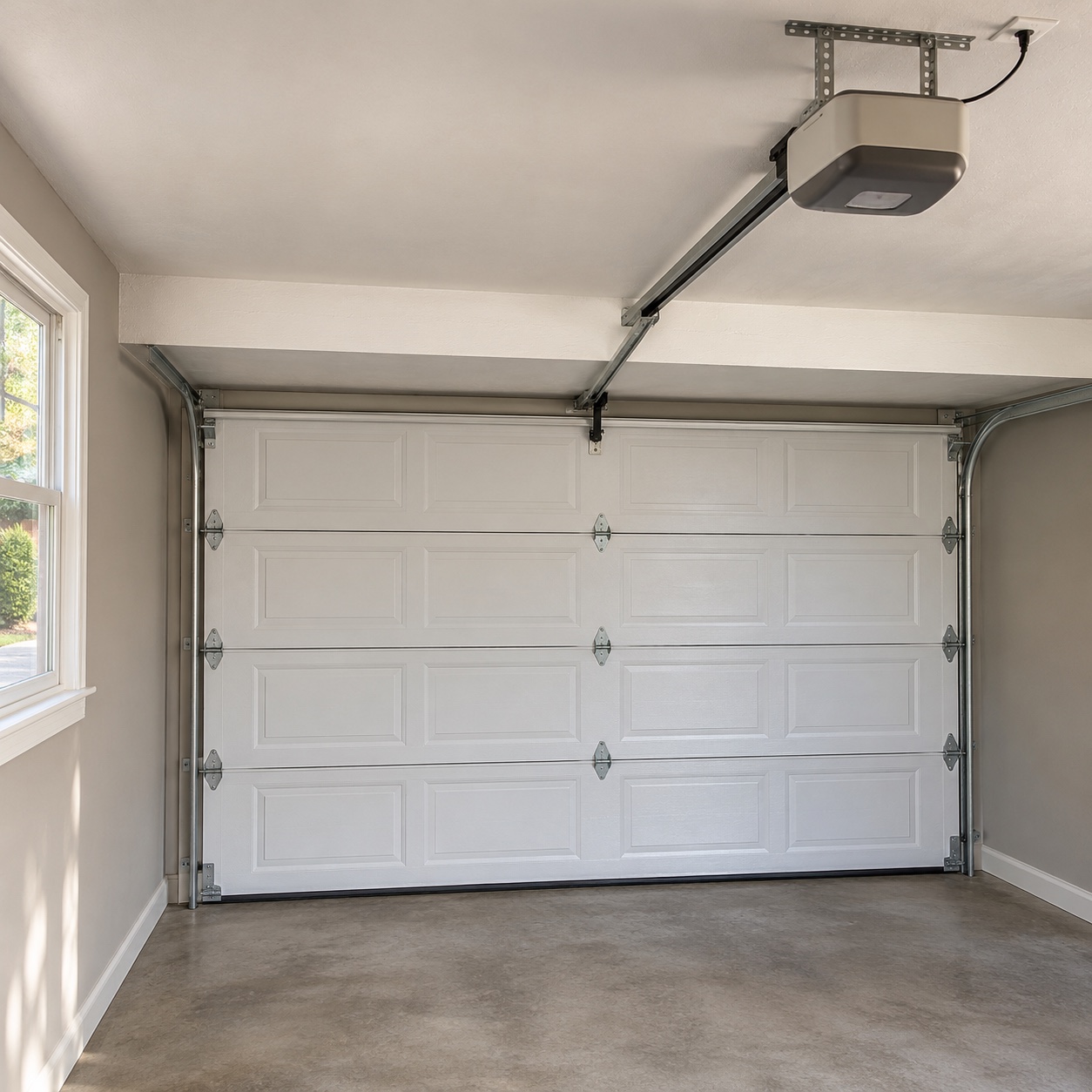
Look beyond the gap over the door
A replacement must fit in three directions. Amarr's glossary also distinguishes sideroom, beside each jamb, from backroom, extending into the building at the height the system needs.
Above the opening
Note beams, pipes, ducts and low light fixtures. A single obstruction can matter more than the overall ceiling height.
Beside the opening
Show both sides. A wall, shelf or utility installation can limit space for the proposed hardware or a wall-mounted opener.
Behind the opening
Show the ceiling area farther inside. The open door, horizontal tracks and any opener rail need room there too.
Amarr's sizing guidance specifically calls for checking the chosen door's manufacturer requirements and accounting for obstructions, including an existing opener or light fixture. Treat internet clearance numbers as starting points, not approval to buy a particular system.
Gather useful photos without climbing
Keep the door stationary and stay clear of its moving parts. From a safe position on the floor, take a wide photo of the inside of the closed door, a view of each upper corner, and a view looking back along the ceiling. If the door cannot close safely, leave it where it is and tell the technician.
Include the beam or obstruction in a wider shot so its position is understandable. Add model information from paperwork and any existing measurements. Leave overhead measuring to the installer if it requires a ladder, reaching around hardware or moving stored items near the door system.
Tell the estimator about planned changes too: new ceiling insulation, finished drywall, a storage rack or a different vehicle. Do this before those items occupy the space. Photos help explain the problem; they do not replace an on-site fit check.
Low-headroom tracks can help, with tradeoffs
Clopay's track-options guide describes low-headroom systems that reduce the space needed above the opening. Its front-mount and rear-mount examples have different headroom, sideroom and backroom requirements. Saving space in one direction can require more room elsewhere.
That is why there is no single minimum ceiling gap that works for every garage door. The answer depends on the selected door and complete hardware arrangement. Ask which configuration the estimate includes and which obstruction it is designed to clear.
Do not assume the old tracks can stay just because the replacement has the same opening width and height. DASMA's garage door safety guidance explains that track compatibility depends on factors including section thickness, door weight, headroom and opener location. Door sections and tracks work as a system.
A wall-mount opener is a separate fit decision
Moving the opener off the center of the ceiling may help with an opener-rail conflict, but it does not remove a sectional door's overhead tracks or the space occupied by the open door.
Wall-mounted openers also have equipment and clearance requirements. Chamberlain Group's jackshaft installation requirements show why door configuration and available side space matter. Those requirements cover listed models; they are not a universal specification for every current opener.
Ask the installer to check the exact proposed model against its current manual and the planned track system. Buying an opener first can leave you solving the wrong clearance problem. Our opener installation service is a place to start that discussion.
Five questions to settle before ordering
- What is the limiting obstruction? Ask the estimator to identify it and record the confirmed site dimensions.
- Which door and track configuration are included? The estimate should name the proposed system, rather than leave the clearance solution to installation day.
- Will the existing opener work? If a replacement is proposed, ask why and request confirmation of the exact model's compatibility.
- What will the usable opening be with the door fully open? Explain the vehicle clearance you need, including a roof rack or carrier. A new door does not automatically make the doorway taller.
- Does another trade need to work first? Resolve any proposed lighting, utility or structural changes and their responsibility before scheduling the door installation.
A useful estimate separates the door work from any work by others. Our garage door installation guide covers the wider replacement process and written-estimate details.
Do not modify the hardware to create space
Do not move tracks, loosen brackets, change springs or cables, or adjust opener force or travel to squeeze a door past an obstruction. Do not cut a beam or relocate wiring or piping as part of a homeowner fit check. Those decisions need the appropriate professional assessment.
If the current door is scraping a beam, running crooked or showing a loose cable, stop using it and arrange service. A planning article is not a reason to keep cycling a door that is already contacting something.
Common low-headroom questions
Can a sectional garage door fit under a low ceiling?
Sometimes. Low-headroom configurations exist, but an installer must confirm the opening, obstructions, side space, backroom and opener together. A photo or one measurement cannot establish the final fit.
Is there one minimum headroom measurement?
No universal number covers every door, track and opener combination. Use the specifications for the actual system being quoted and have the available space verified on site.
Will low-headroom tracks make the opening taller?
They address how the door moves above the opening. They do not raise the header. Ask the installer to confirm the final usable vehicle opening separately.
Should I buy the opener before choosing the replacement door?
Have the full arrangement checked first. A side-mounted opener may help in some garages, but its compatibility and mounting space still need confirmation.
Plan the fit before choosing the finish
Literally Garage Door is a family-owned local company. Call (551) 279-6408 for a free estimate. Tell us your town, what sits above the opening and what you want to change about the current setup.
Learn about garage door installation and check our current service-area directory for Northern New Jersey appointment coverage. A few useful photos and a confirmed fit plan can make the replacement conversation much more productive.