Check the finish before choosing a cleaner
Find the door brand, model and finish in your paperwork or a label you can read safely. Note whether the door has been repainted. A white factory coating, a textured specialty finish and a field-applied paint may need different care. If you cannot identify the finish, ask before applying a product.
That distinction is practical. The Clopay Modern Steel FAQ gives Lustra finishes their own cleaning directions and specifically excludes paper towels and microfiber cloths because they can leave residue. A cloth that suits another door is not automatically right for this finish.
Keep the correct care sheet available while choosing supplies. Do not combine a detergent recipe from one manufacturer with a wax recommendation for another finish.
Why road salt needs a separate look
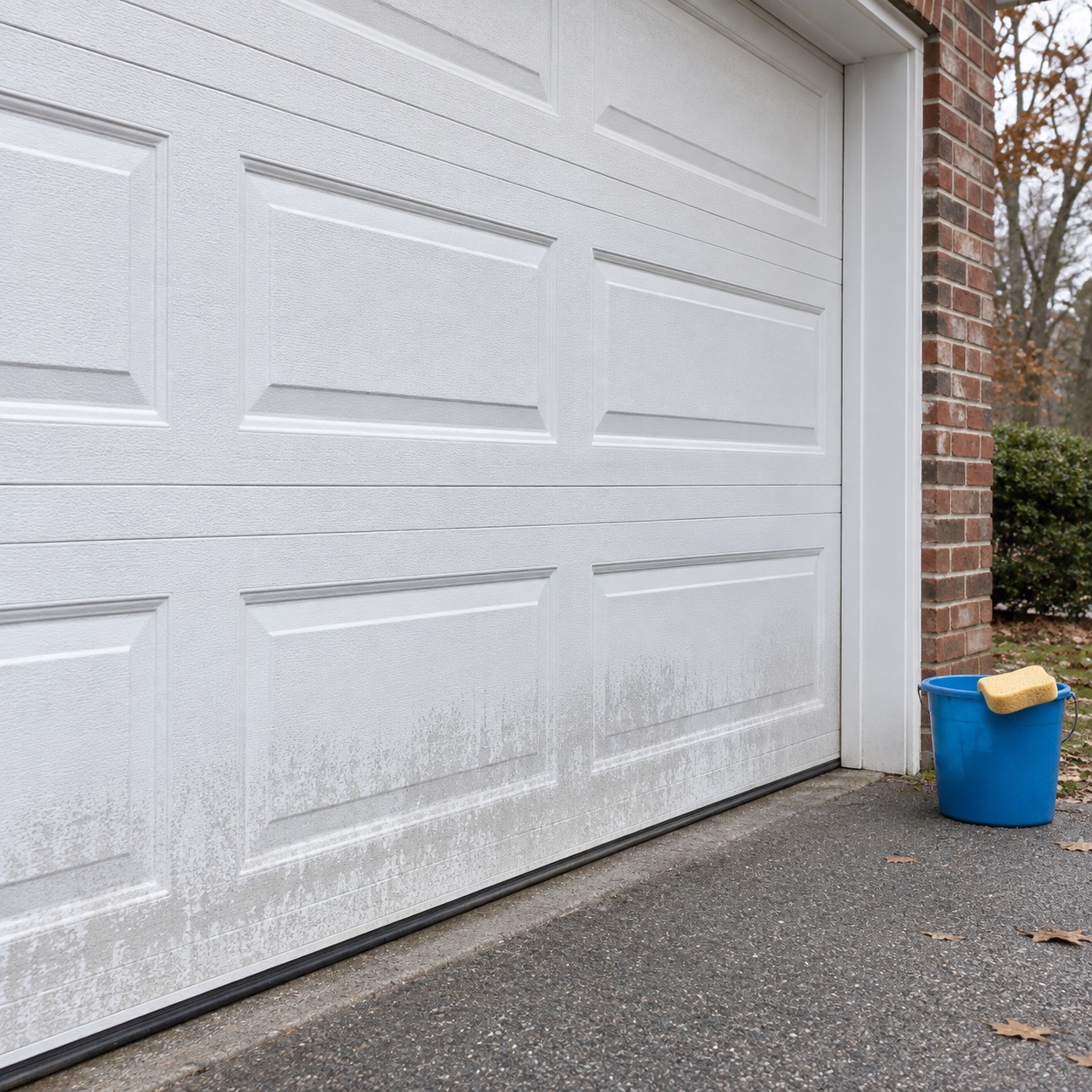
Amarr's care and maintenance guidance identifies rock salt, ice melt and salt spray as corrosive exposures for steel doors and components. It calls for more frequent exterior cleaning where salt is used on the driveway or in salt-air conditions, and it rules out pressure washing.
For a home in Ridgewood or Montclair, the useful question is whether road or driveway splash is reaching the door. You do not need to prove exactly which deicer was used before documenting the marks and checking the care instructions.
Look from the ground at the lower panel faces. Take a photo before cleaning so you can compare the same area later. Appearance alone cannot tell you whether a pale mark is salt, ordinary grime or a change in the coating.
Keep cleaning limited to the reachable panel surface
Choose a time when the door can stay fully closed, everyone knows not to operate it, and the ground gives you secure footing. Postpone washing if runoff could freeze on the driveway or at the doorway. Leave areas requiring a ladder or reaching around equipment for professional help.
For ordinary steel and aluminum care, Amarr's published example is one cup of common household detergent in five gallons of warm water, applied with a sponge or cloth and thoroughly rinsed. That is Amarr's example, not a formula for every door. Use the instructions for your exact product, including any different finish requirements. Never mix cleaners with bleach.
Clopay's finish-cleaning guide describes wet, gentle cleaning tools, approved cleaner options and a clean-water rinse. It excludes scouring powders and solvents. Use only the method your finish allows; a stubborn mark is a reason to stop and ask, not to scrub harder.
Keep fingers out of panel joints and away from the bottom edge. Do not lift the door to expose a dirty joint, pry a seal aside or reach behind the panel. Put the bucket and other supplies away from the door's path before anyone operates it again.
Leave hardware and damaged coatings alone
Washing the exterior is not an instruction to clean, loosen or adjust springs, cables, bottom brackets or track fasteners. Do not spray cleaner into bearings, opener equipment or electrical controls. DASMA's garage door safety guidance explains the tension hazards around springs, cables and bottom brackets.
If you see bubbling paint, flaking, an orange patch or an exposed edge, photograph it and ask about the finish before sanding, polishing, painting or using a rust-removal product. A wash cannot confirm how far damage extends. Mention any earlier repainting or chemical treatment when you request help.
If the door is crooked, a cable is loose or operation has changed, stop using it and arrange service. Do not move a questionable door to get a better cleaning angle.
Check the care interval and any wax requirement
Salt exposure can change the cleaning schedule. Clopay's general finish guide calls for quarterly cleaning in high-road-salt environments and lists particular collections for steel-surface waxing. Its instructions specify liquid rather than paste wax for those steel surfaces and warn against getting wax on decorative hardware.
Check whether that instruction applies to your collection and finish. It is not a reason to wax every material on the door. Keep a short record of the care sheet used, cleaning date and any marks that remain. Read the actual warranty rather than assuming washing guarantees coverage.
What to include when asking for help
Send a wide photo, a closer view of the mark, the door brand and finish if known, and whether it has been repainted. Tell us whether the door still moves normally. You do not need to remove trim or hardware to gather useful information.
Literally Garage Door is a family-owned local company. Call (551) 279-6408 for a free estimate or contact us about the condition you are seeing. Our maintenance and tune-up service can help you plan the next step when the concern goes beyond exterior finish care.