
5 Signs You Need a New Garage Door Opener
Last updated:
By Literally Garage Door Team | Northern NJ garage door experts with years of hands-on experience serving Bergen, Essex, Morris, Passaic, and Hudson counties.
Published: February 17, 2026
Your opener won't last forever. Here's how to know when it's time for a replacement, before it leaves you stranded.
Your Garage Door Opener: The Unsung Workhorse
Your garage door opener is probably the most-used motorized device in your home. It runs 3-5 times per day, 365 days per year. That's over 1,500 cycles annually. Over a decade, that's 15,000+ open-and-close operations, each one putting stress on the motor, gears, drive mechanism, and circuit board.
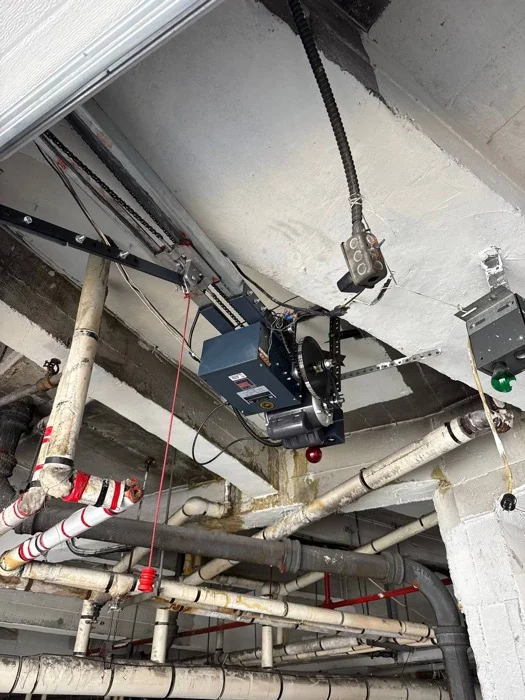
Most homeowners don't think about their garage door opener until it fails. But an aging or failing opener doesn't just stop working one day; it gives you warning signs first. Recognizing these signs gives you time to plan a replacement on your schedule, rather than scrambling when you're locked out of (or into) your garage.
Here are the five most reliable indicators that it's time for a new garage door opener.
Sign #1: Your Opener Is More Than 15 Years Old
Garage door openers are built to last, but they don't last forever. Most manufacturers design their openers for a 10-15 year lifespan under normal residential use. After 15 years, even a well-maintained opener is living on borrowed time.
Age affects every component:
- Motor: The motor windings degrade over time. An aging motor draws more current, runs hotter, and produces less torque. You may notice the door moves more slowly than it used to, or the motor sounds strained.
- Gears: In chain-drive and belt-drive openers, the nylon or metal gears that transfer motor power to the drive mechanism wear down. Stripped gears are one of the most common failures in older openers; the motor runs, but the door doesn't move.
- Circuit board: The electronic control board manages everything, signal reception, motor control, safety features, lights. Older circuit boards are more susceptible to power surges, moisture damage, and component failure. A fried circuit board is a meaningful repair cost, at which point you're putting money into a machine that's already past its prime.
- Drive mechanism: Chains stretch, belts crack, and screw drives wear. The slop and play in an old drive system causes the door to jerk, shudder, or move unevenly.
The bottom line: If your opener is 15+ years old and showing any other symptoms on this list, replacement is almost always more cost-effective than repair. A new opener installed often costs not much more than a single repair on an old unit, and another component on that old unit will fail soon after. we give both options upfront after a free estimate so you can compare.
Sign #2: It's Excessively Noisy
All garage door openers make some noise. But there's a difference between normal operational sound and the grinding, rattling, screeching, or banging that signals a problem.
Chain-drive openers are inherently louder than belt-drive models. But even a chain-drive shouldn't sound like a machine shop. If the noise has gotten progressively worse over time, something is wearing out.
Common noise sources in aging openers:
- Grinding/growling: Usually indicates worn gears. The motor gear (often nylon) meshes with a larger gear that drives the chain or belt. When the teeth wear down, the gears slip and grind against each other.
- Rattling/vibration: Loose mounting hardware, a worn drive chain with too much slack, or worn trolley components. Vibration can also indicate that the opener is working harder than it should, fighting against a door that's out of balance or has friction issues.
- Screeching/squealing: Metal-on-metal contact without adequate lubrication, or a failing motor bearing. Bearings are sealed units that can't be serviced, once they go, the motor needs replacement.
- Banging at the end of travel: The door slamming to a stop instead of decelerating smoothly indicates worn limit switches or a failing soft-start/soft-stop mechanism.
Excessive noise isn't just annoying; it's especially problematic if you have living space above or adjacent to the garage. Modern belt-drive and direct-drive openers are dramatically quieter than older models. If noise is a concern, a new opener can transform the experience. Ask about our opener installation service.
Sign #3: Intermittent or Unreliable Operation
This is the most frustrating symptom. The opener works sometimes and doesn't work other times. You press the button and nothing happens. You press it again and it works. Or it opens fine but won't close. Or it reverses for no apparent reason. Or it stops halfway and just... sits there.
Intermittent operation has many possible causes:
- Failing circuit board: As the electronic components age, solder joints can crack, capacitors can bulge, and relays can become unreliable. The result is inconsistent signal processing; sometimes the board responds to the remote, sometimes it doesn't.
- Worn motor contacts: The electrical contacts that supply power to the motor can pit and corrode over time, creating intermittent connections.
- Signal interference: Older openers use fixed-frequency remotes that are more susceptible to interference from LED lights, nearby radio equipment, military installations, and even some smart home devices. Modern openers use rolling-code technology that's more resistant to interference.
- Sensor alignment drift: The photoelectric safety sensors can gradually shift out of alignment due to vibration, temperature changes, or accidental bumps. When misaligned, they block the door from closing. But slight misalignment may cause intermittent issues; the sensors work at some temperatures but not others.
- Thermal overload: An aging motor that's working harder than it should may overheat and shut down via its thermal protection circuit. After cooling for 15-30 minutes, it works again, until it overheats again.
Before replacing the opener, have a technician rule out simpler issues (sensor alignment, remote batteries, door balance). But if the door is balanced, sensors are aligned, and the opener is still unreliable, it's time for a new unit. Opener repair may resolve individual issues, but chronic intermittent problems in older units usually point to multiple failing components.
Sign #4: It Lacks Modern Safety Features
Safety standards have evolved significantly over the past three decades. If your opener is missing any of the following features, it's not just inconvenient; it's a safety risk:
- Auto-reverse (mechanical): Required since 1991. The door must reverse when it contacts an obstruction. If your opener pushes through obstructions without reversing, it's a serious hazard, especially with children and pets.
- Photoelectric sensors: Required since 1993. These sensors create an invisible beam across the door opening 4-6 inches above the floor. If anything breaks the beam while the door is closing, the door stops and reverses. Openers manufactured before 1993 may not have sensor ports at all.
- Rolling code technology: Introduced in the mid-1990s. Older fixed-code remotes transmit the same signal every time, making them vulnerable to code grabbers, devices that capture your remote's signal and replay it to open your garage door. Rolling code remotes generate a new code with every press, making code grabbing virtually impossible.
- Manual release: All modern openers have an emergency release mechanism (the red cord) that disconnects the door from the opener. Very old openers may have unreliable or hard-to-reach release mechanisms.
- Timer-to-close: Many modern openers can be programmed to automatically close after a set period. This prevents the common "did I close the garage?" worry and ensures your home is secure even if you forget.
If your opener was manufactured before 1993, it almost certainly lacks photoelectric sensors and may lack mechanical auto-reverse. This is a genuine safety emergency for households with children. Replace it immediately; the cost of a new opener is trivial compared to the risk.
Sign #5: No Smart Home Connectivity
This isn't a safety issue; it's a quality-of-life upgrade that most homeowners don't realize they want until they have it. Smart garage door openers (or smart add-on modules) connect to your home Wi-Fi and let you:
- Monitor status remotely: Check whether the garage door is open or closed from anywhere using your phone. No more driving back home to check.
- Open/close remotely: Let in a delivery person, contractor, or family member from your phone. Close the door if you forgot.
- Receive alerts: Get a notification if the door opens unexpectedly or has been left open past a set time.
- Set schedules: Automatically close the door at a set time every night.
- Integrate with smart home systems: Works with Amazon Alexa, Google Home, Apple HomeKit, and other platforms. "Hey Alexa, close the garage door."
- Grant temporary access: Give a guest or service person a time-limited code that expires after use or after a set period.
Many new openers include built-in Wi-Fi and smart home integration at no additional cost over comparable non-smart models. If you're replacing your opener anyway, there's little reason not to go smart.
What to Expect When Replacing Your Opener
Professional garage door opener installation typically takes 2-3 hours and includes:
- Removal and disposal of the old opener
- Installation and mounting of the new unit
- Programming remotes and wall buttons
- Installation and alignment of safety sensors
- Adjustment of force and travel limits
- Full testing of all safety features
- Demonstration of smart features (if applicable)
Cost: A quality residential opener with professional installation depends on whether you choose a standard model or a premium model with battery backup and smart features. The free estimate includes the opener, mounting hardware, sensors, remotes, wall button, and labor, and we price it upfront after a free estimate.
Repair vs. Replace: The Decision Framework
Not every opener problem requires replacement. Here's a quick guide:
- Opener is <10 years old + single issue: Repair is usually worthwhile. A gear replacement, circuit board swap, or sensor realignment can extend the life by several more years. See our opener repair service.
- Opener is 10-15 years old + recurring issues: Consider replacement. The math favors a new unit when repair costs approach 50% of replacement cost.
- Opener is 15+ years old: Replace. Even if the current problem is fixable, another component will fail soon. A new opener is more reliable, safer, quieter, and smarter.
- Opener lacks safety sensors: Replace immediately regardless of age.
Related
For more information, read our garage door openers guide.
Bergen, Essex, Hudson, Morris, Passaic, Sussex, Warren, Union and Somerset Counties.