
Garage Door Safety Tips Every Homeowner Should Know
Last updated:
By Literally Garage Door Team | Northern NJ garage door experts with years of hands-on experience serving Bergen, Essex, Morris, Passaic, and Hudson counties.
Published: February 17, 2026
Your garage door is the largest, heaviest moving object in your home. Here's how to keep your family safe around it.
Why Garage Door Safety Matters More Than You Think
A typical residential garage door weighs between 150 and 400 pounds. It moves up and down roughly 1,500 times per year. It's powered by high-tension springs that store enough energy to cause serious injury, and controlled by an electric motor with enough force to crush objects in its path.
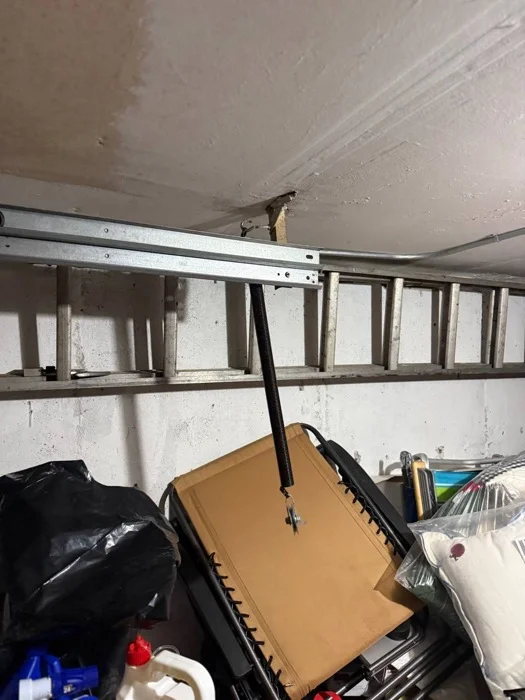
The U.S. Consumer Product Safety Commission reports that garage doors cause an estimated 20,000-30,000 injuries every year. Many of these are preventable with basic awareness and a few minutes of monthly maintenance. This guide covers the most important garage door safety tips that every homeowner, especially those with young children, should know and practice.
1. Perform a Monthly Visual Inspection
Once a month, take five minutes to visually inspect your garage door system. You don't need to be a mechanic; just look for anything that seems off. Here's what to check:
- Springs: Look at the torsion springs above the door. Are there any gaps, rust, or stretched-out coils? A gap in a spring means it's broken and needs immediate professional replacement.
- Cables: Check the lift cables on both sides of the door. They should be taut, with no fraying, kinks, or loose strands. Frayed cables can snap without warning.
- Rollers: Look at the rollers that ride in the tracks. Cracked, chipped, or worn rollers should be replaced. Nylon rollers are quieter and safer than metal ones.
- Tracks: The vertical and horizontal tracks should be straight, with no dents, bends, or gaps at the mounting brackets. The door should move through the tracks smoothly without scraping or binding.
- Hinges: Check for cracks, especially at the roller stem. A cracked hinge can cause the door to bind or the roller to pop out of the track.
- Weatherstripping: The rubber seal along the bottom of the door and the sides should be intact. Damaged weatherstripping lets in water, pests, and cold air.
- Hardware: Look for loose bolts, nuts, or brackets. Vibration from daily use can loosen hardware over time.
If you spot anything concerning, don't attempt repair on spring or cable components yourself. Call a professional for a maintenance inspection.
2. Test the Auto-Reverse Safety Feature Monthly
Federal law has required all garage door openers manufactured after 1993 to include an auto-reverse mechanism. This feature stops and reverses the door if it encounters an obstruction while closing. There are two types, and your opener should have both:
Mechanical Auto-Reverse Test
Place a 2x4 board flat on the ground in the center of the door's path. Press the close button. When the door contacts the board, it should immediately stop and reverse direction. If the door pushes through the board or doesn't reverse within 2 seconds, the force settings need adjustment. This is a critical safety failure, do not use the door until it's fixed.
Photoelectric Sensor Test
The small sensors mounted 4-6 inches above the ground on each side of the door opening emit an invisible beam. When anything breaks this beam while the door is closing, the door should stop and reverse immediately. Test this by:
- Start closing the door with the wall button or remote
- Wave your foot or a long object (like a broom handle) through the sensor beam
- The door should stop and reverse immediately
If the sensors don't stop the door, check that they're aligned (most have indicator lights), clean the lenses, and make sure nothing is blocking the beam. If they still don't work, call for service immediately.
3. Keep Fingers Away from Door Sections
This is one of the most common causes of garage door injuries, and it's almost entirely preventable. When a garage door opens and closes, the sections (panels) fold together at the hinges. The gap between sections closes as the door moves, creating a pinch point that can crush fingers.
- Never place fingers between door sections; not when the door is moving, and not when it's stationary (someone could activate it remotely at any time)
- Use the handles: If your door has handles or a bottom lift bar, use those; they're designed for safe gripping
- Teach children: Make sure kids understand that the door sections are off-limits. The pinch points are at a child's hand height, making kids particularly vulnerable
- Consider pinch-resistant panels: Many modern garage doors feature flush-joint or tongue-and-groove designs that eliminate the gap between sections. If you're replacing your door, ask about pinch-resistant options
4. Never Let Children Play Near or Under the Garage Door
Children are naturally curious, and a garage door going up and down can be fascinating to watch. But a garage door is not a toy, and the area around it is not a play zone. Establish clear rules:
- No running under a moving door: Children sometimes treat a closing garage door as a game, racing to get under it before it closes. This is extremely dangerous. A door can reverse, stall, or the safety sensors can malfunction.
- No hanging on the door: Kids may try to grab the bottom of the door and ride it up. This adds unexpected weight, can throw the door off its tracks, and puts the child directly in the path of heavy moving components.
- Keep remotes out of reach: Garage door remotes and wall buttons should not be accessible to young children. The wall button should be mounted at least 5 feet above the floor, high enough that small children can't reach it.
- Supervise: When the garage door is in use, keep an eye on children in the area. A two-second distraction is all it takes for a child to dart under a closing door.
- Lock the door when not in use: If your opener has a lock function (most modern ones do), use it to prevent children from accidentally operating the door.
5. Never Attempt DIY Spring Repair
This point cannot be emphasized enough. Garage door springs; both torsion springs (mounted on a bar above the door) and extension springs (mounted along the horizontal tracks), are under enormous tension. A standard torsion spring stores enough energy to lift a 200-400 pound door thousands of times. When that energy is released uncontrollably, the results can be catastrophic.
People are seriously injured and killed every year attempting DIY spring repair. This is not an exaggeration designed to sell you a service call. It's a documented reality. The tools required (winding bars, vise grips, safety cables) are specialized, and the technique requires training and experience.
What you CAN safely do:
- Visually inspect springs for gaps, rust, or wear
- Lubricate springs with silicone spray (keeping hands clear of coils)
- Call a professional when you notice any issue
What you should NEVER do:
- Attempt to unwind, adjust, or replace torsion springs
- Remove or reattach cables connected to the spring system
- Use makeshift tools (screwdrivers, pliers) instead of proper winding bars
- Watch a YouTube video and assume you can replicate it safely
6. Carbon Monoxide: The Invisible Garage Danger
This safety tip isn't about the garage door mechanism itself, but it's critical for anyone with an attached garage. Carbon monoxide (CO) is an odorless, colorless gas produced by running vehicles. In a closed or poorly ventilated garage, CO levels can reach deadly concentrations in minutes.
- Never run a car in a closed garage: Even with the garage door open, CO can accumulate faster than it dissipates, especially if the interior door to the house is also open. The gas can seep into living spaces through walls, doors, and ductwork.
- Don't warm up your car in the garage: In cold Northern NJ winters, it's tempting to start the car and let it warm up while you finish getting ready. If you must warm up the car, back it out of the garage first, then close the garage door behind it.
- Install CO detectors: Every home with an attached garage should have carbon monoxide detectors, in the garage itself, in any room above the garage, and in hallways near bedrooms. Test them monthly and replace batteries annually.
- Ensure proper ventilation: If you use the garage as a workshop and run gas-powered tools (generators, pressure washers), open the garage door fully and consider additional ventilation.
7. Schedule Annual Professional Maintenance
A professional maintenance tune-up covers everything on this list and more. A trained technician will:
- Inspect all springs, cables, rollers, hinges, and tracks
- Test and adjust the auto-reverse mechanism
- Verify sensor alignment and function
- Lubricate all moving parts with appropriate products
- Check door balance (a properly balanced door stays in place when opened halfway)
- Tighten all hardware
- Inspect the opener motor, gears, and drive system
- Test the emergency release mechanism
Annual maintenance is priced at a free estimate upfront after a free estimate and takes about an hour. It extends the life of every component, catches problems before they become emergencies, and; most importantly, keeps your family safe.
Quick Safety Checklist
- ☐ Monthly visual inspection of springs, cables, rollers, tracks
- ☐ Monthly auto-reverse test (mechanical + photoelectric)
- ☐ Wall button mounted 5+ feet high (out of children's reach)
- ☐ Remotes stored away from children
- ☐ Family rules about not playing near the door
- ☐ CO detectors installed and tested
- ☐ No car idling in closed garage
- ☐ Annual professional maintenance scheduled
- ☐ Emergency release cord identified (red cord hanging from opener trolley)
Related
- Maintenance & tune-up
- Garage door repair
- Broken spring repair
- Broken spring guide
- Door closes then reopens
For more information, read our garage door safety guide.
Bergen, Essex, Hudson, Morris, Passaic, Sussex, Warren, Union and Somerset Counties.